
Cedar vs. metal raised garden beds
See how cedar and metal kits compare on food safety, longevity, and real-world performance.
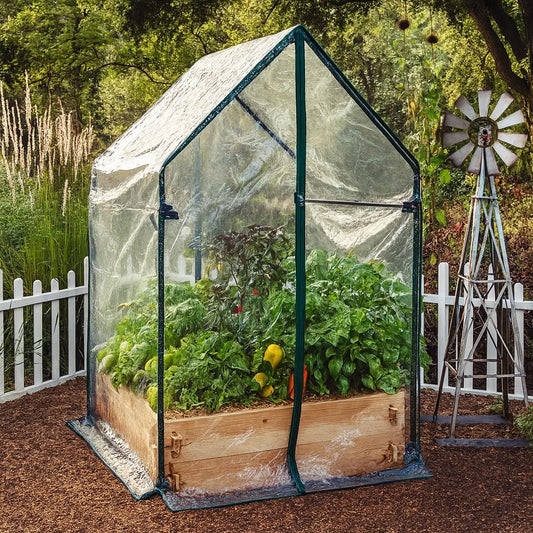
Read guideFrom beginning seed-starting kits to extended-season gardening systems, we’ve got you covered. Timberlane Gardens DIY kits make it simple to build a complete garden setup with ready-to-use bundles. Each kit includes everything you need for success — from cedar raised beds and greenhouse covers to pest protection, seed-starting accessories, and season-extension tools.
Every Timberlane Gardens kit is built from sustainably sourced Select Cedar, naturally rot-resistant and safe for growing vegetables, herbs, and flowers. Designed and handcrafted in the USA, these kits combine thoughtful design with lasting durability and clean, natural materials. To see exactly how we source our cedar and what sustainability means in our shop, visit Sustainability at Timberlane Gardens.
Our DIY collection brings together practical combinations for home gardeners — raised beds paired with greenhouse covers, bug covers, and starter systems that make planting easier and extend your growing season. No searching for separate parts or tools — just assemble, plant, and enjoy.
If you're deciding between cedar and metal raised beds, we also put together a gardener-to-gardener guide explaining how each material performs throughout the season. Read the cedar vs metal comparison.
Need help planning your raised bed layout? Below this collection, you'll find our Ultimate Raised Bed Soil Guide and the Plant Spacing & Capacity Estimator to help you choose the right bed sizes and configurations. When you click into a specific raised bed, each product page includes a soil calculator so you can estimate how many cubic feet of soil you’ll need before you order.
Directed by Nature. Built by hand. Designed for a stronger growing season.
For clear answers on shipping, returns, replacements, and how to reach us quickly, visit our Customer Support & Trust Center.
Free lower-48 shipping on most orders. Alaska & Hawaii may incur a fee based on weight.
One-year warranty on standard products, up to a three-year warranty on premium items, and a 90-day warranty on B-Stock. All warranties include free part replacement and covered shipping costs. Please see each item for full warranty details.

For clear answers on shipping, returns, replacements, and how to reach us quickly, visit our Customer Support & Trust Center.
Free lower-48 shipping on most orders. Alaska & Hawaii may incur a fee based on weight.
One-year warranty on standard products, up to a three-year warranty on premium items, and a 90-day warranty on B-Stock. All warranties include free part replacement and covered shipping costs. Please see each item for full warranty details.
Free Shipping
Get clear, reliable guidance based on real gardening experience so you can choose the right raised beds with confidence.
See how cedar and metal kits compare on food safety, longevity, and real-world performance.
Read guideCompare Timberlane Gardens bed sizes, depths, and layouts so you can choose the right setup.
Read guideEstimate soil volume, bag counts, and mix ideas for any Timberlane Gardens raised bed.
Read guideA complete, plain-language guide to building and maintaining healthy soil in your raised beds.
Read guideUse this guide to estimate how many plants fit comfortably in a raised bed based on real root-space volume, not just square footage. Select how many of each plant you want to grow, and we’ll show you which Timberlane Gardens bed sizes can support them.
Adjust the number of plants in each row. The calculator uses a conservative estimate of cubic feet of root space per plant for tomatoes, cucumbers, peppers, green beans, and zucchini/summer squash.
Total estimated root-space volume needed: 0.0 cubic feet
This is an estimate for root space and comfortable spacing in a raised bed. Actual spacing can vary by variety, pruning style, and how intensively you plant.
We’ll compare your total root-space needs against common Timberlane Gardens raised bed sizes using internal dimensions (mortise-and-tenon joints already accounted for).
Tip: It is usually better to have a little extra space than to overpack a bed, especially for tomatoes, peppers, cucumbers, and squash.

Cedar raised garden bed kits and planters made in the USA. Handcrafted from Select Cedar in Homer Glen, Illinois — sustainably built for lasting beauty, simple tool-free assembly, and organic growing.